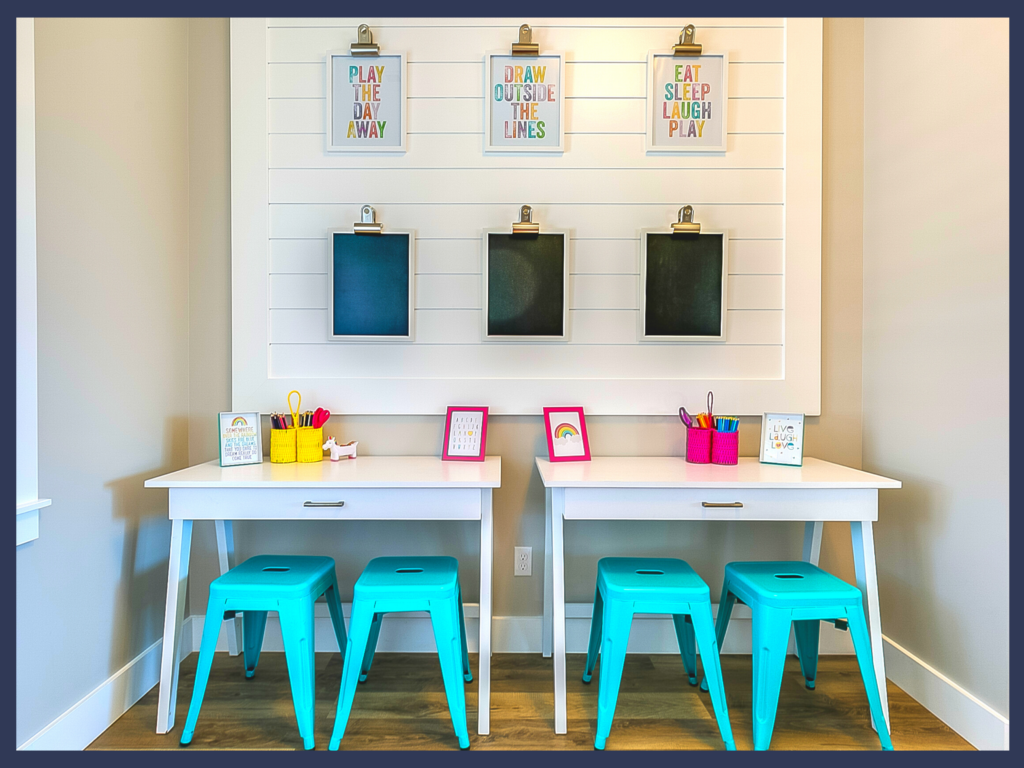
If you are a homeschool mom who has clicked through Pinterest or Instagram looking for ideas for setting up a homeschool room then you have probably come across some amazing homeschool spaces. Those images can certainly inspire you. Unfortunately, they can also cause you to feel inadequate. Comparison is the thief of joy, and while I too love looking at beautiful homeschool room setups, it is important to stay focused on what you and your family actually need to be successful.
#1 You do not need a space in your home that looks like a classroom. One mistake new homeschoolers make is trying to recreate a school-like setting in their home. I was guilty of this (especially since I was an elementary teacher for so long). Our space has transformed over time to meet the needs of my kids.
#2 Practicality is more important than aesthetics. I’ve seen some really cute homeschool spaces that use old-fashioned wooden desks. I’m talking about the desks where the seat is connected and you need to lift the top to get inside. They look charming and pay tribute to the one room schoolhouse, but they are certainly not comfortable and I’m sure it is frustrating to have to move the things on the worksurface to get a supply from inside. Pick a work surface that provides a space to spread out with easy access to supplies and materials.
#3 Consider the best ways to avoid distractions. Distractions come in many forms. This is especially true for children with ADHD or sensory-processing issues. Lighting, blowing vents, sounds of neighbors’ dogs barking or even room temperature impact kids throughout the day. Try to find a location in your home that is comfortable and as free from distraction as possible.
#4 Avoid things that are permanent. As I mentioned above, our home learning space has transitioned over time. Things have changed as we’ve learned what our actual needs are and what works best for our kids individual learning styles. Had I jumped right into the custom built in bookshelves and desks with a whiteboard mounted to the wall as I had visualized, we wouldn’t have had the flexibility to adapt as we learned what worked best for us. Kids grow and their physical requirements change. As they progress, the type of work they do changes. Leave space for change so you can adapt the space over time.
#5 Involve your children. This is actually a space for them. Take their thoughts, ideas, suggestions and requests into account. Ask what they feel they need to be successful. Talk about what makes them comfortable and uncomfortable when it comes to physical space. It’s important for them to feel ownership over the space since they will be the ones spending the most time in it.
Most importantly, keep in mind that setting up a homeschool space should be an enjoyable experience. Everyone has a different floor plan and budget to work with. Start with the basics, see what works and adapt and add to it over time. Have fun with your homeschool room setup!